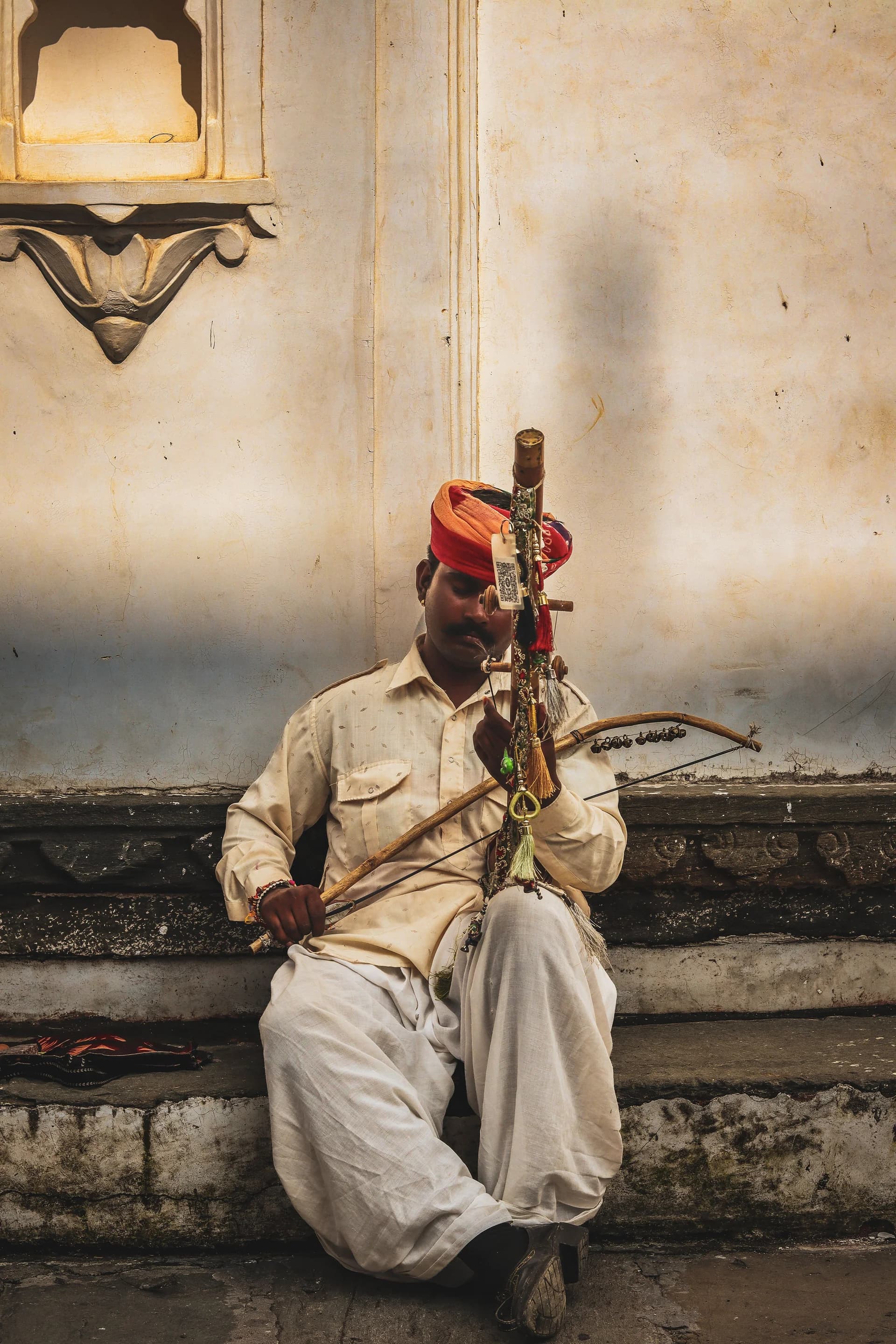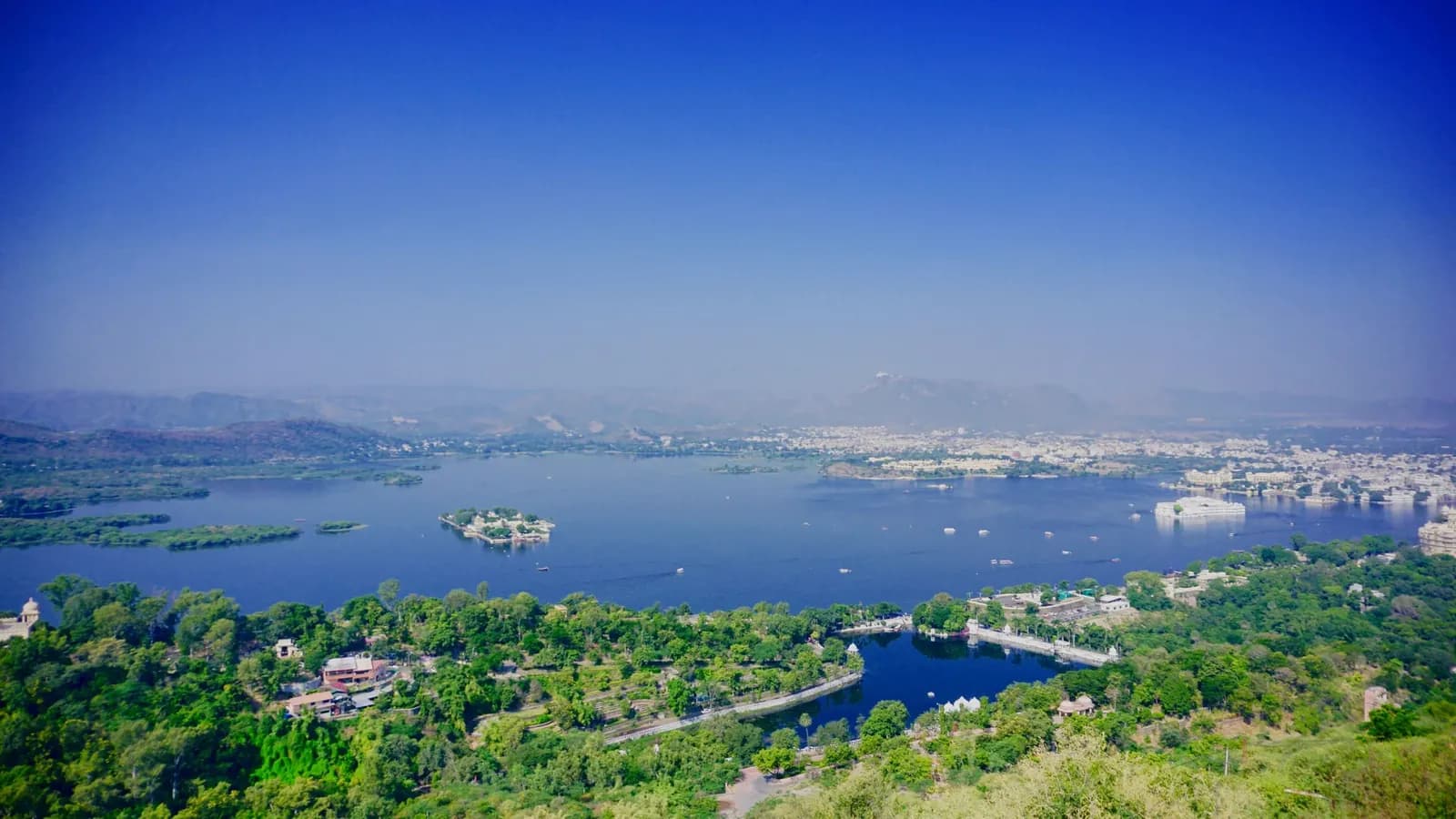
Spend a morning in Udaipur's old city and you'll notice it fast: the colour isn't only on the walls. It's wrapped around men's heads, swirling in women's skirts and jingling on their ankles. Rajasthani dress is a language, and once you know a few words, every street becomes easier to read.
Here's a friendly guide to what people wear in Mewar, what it means, and how to enjoy it respectfully.
The turban: more than a hat
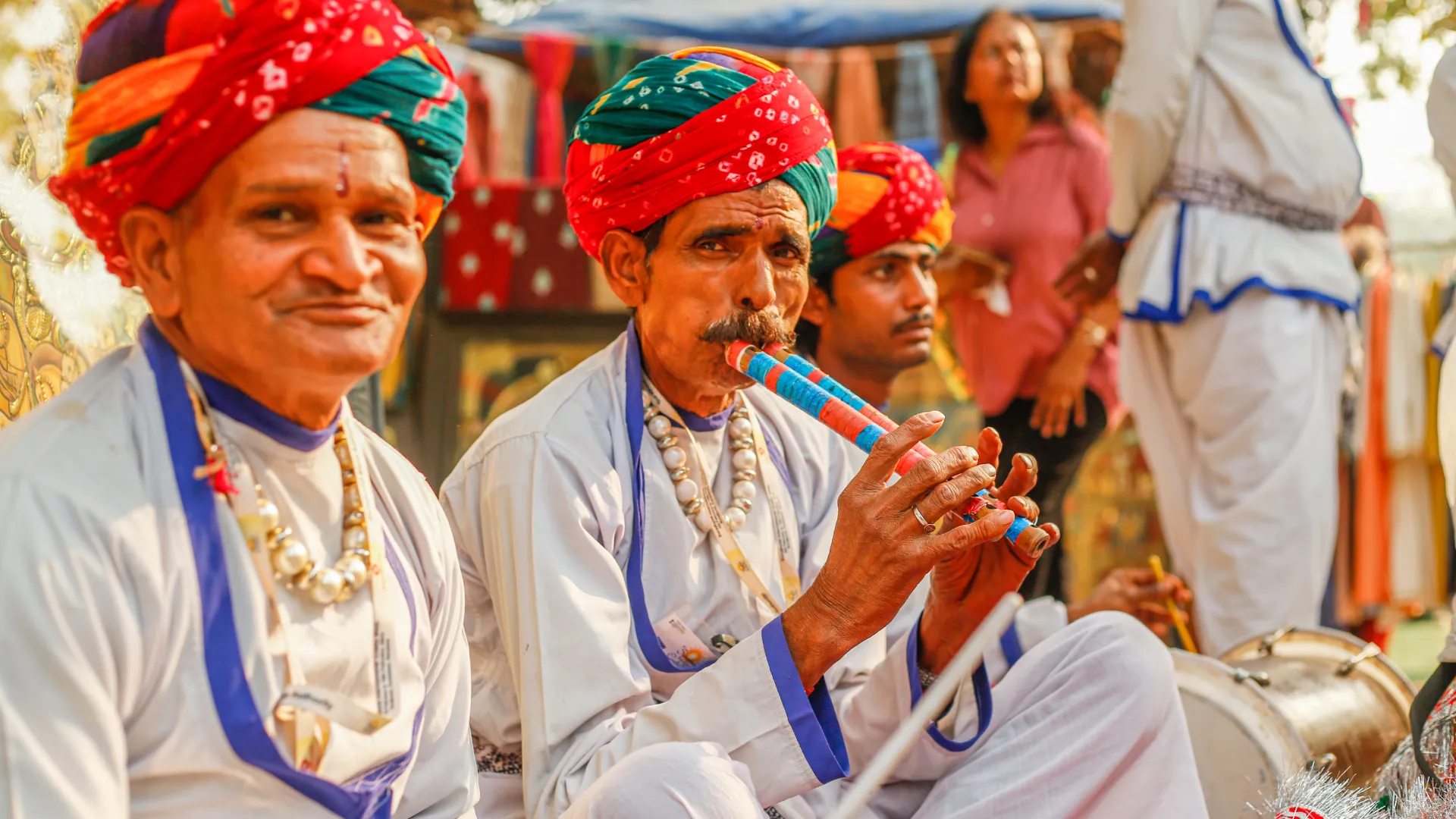
In Rajasthan, a turban says who you are. Region, community, occasion and sometimes mood can all be read in its colour and the way it's tied. Mewar has its own recognisable style of tying, and older men often wear theirs with real pride.
Pagdi and safa
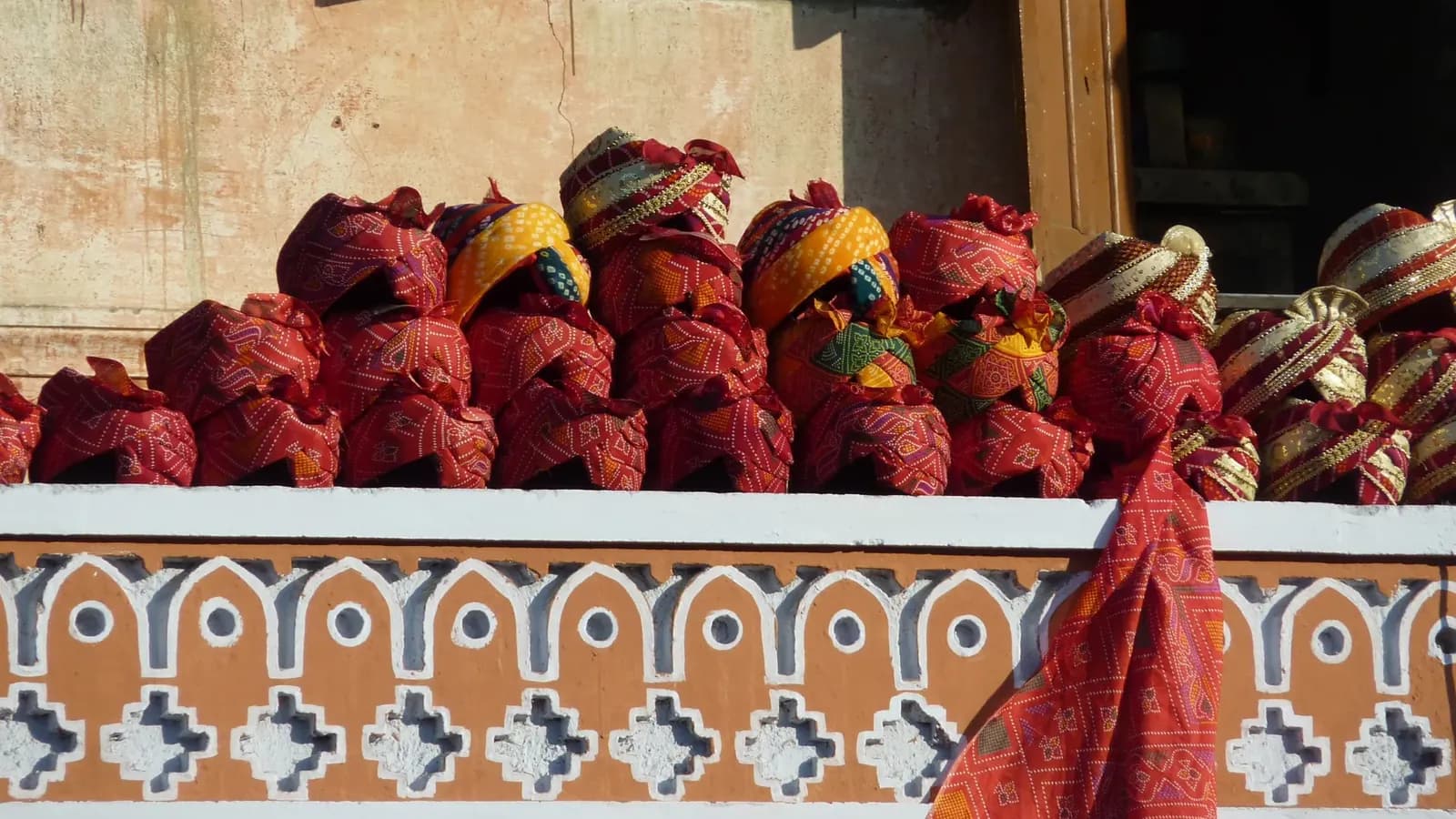
The words get used loosely, but broadly a pagdi is the more formal, carefully wound turban, often long, narrow fabric tied in tight folds in a regional style. A safa is usually a broader, looser wrap, often with a tail of fabric hanging down the back, and it's what you'll see at weddings, worn by grooms and guests alike.
What the colours can tell you
- Saffron (kesariya) is tied to courage and Rajput pride, and you'll see it at celebrations and on ceremonial days.
- Leheriya stripes in greens, pinks and yellows appear around the monsoon and Teej.
- Bright bandhani and multicoloured turbans are festival and wedding favourites.
- Plain white or muted shades are often worn by older men or in times of mourning.
These are traditions, not strict rules. Ask a turban seller and you'll get a longer, more personal answer.
Bandhani and leheriya: the two great tie-dyes
Bandhani is made by pinching tiny points of cloth, tying each one tight with thread, and dyeing the fabric. Untie it and you get fields of little dots, sometimes thousands on a single odhni. Look closely at a good piece and you'll see the slight irregularity that tells you it was done by hand.
Leheriya (from "lehar", a wave) is rolled and tied diagonally to create rippling stripes. It's the fabric of the monsoon, worn especially at Teej, when the city turns green and pink.
Ghagra, kanchli and odhni
The classic outfit for women in Mewar has three parts:
- Ghagra, a long, wide, pleated skirt. The fuller it is, the more beautifully it spins, which you'll see for yourself at a ghoomar performance at Bagore ki Haveli.
- Kanchli or kurti, the fitted top worn above it.
- Odhni, a long veil-scarf draped over the head and shoulders, often in bandhani or leheriya, often with mirror work or gota (metallic ribbon) borders.
Men's traditional wear includes the angarkha (a wrap-style tunic), dhoti or churidar, and pointed leather mojaris. For weddings, the sherwani and safa combination is the classic.
Jewellery that carries meaning
Traditional Rajasthani jewellery is bold, and much of it is silver. Some pieces you'll notice:
- Borla or rakhdi, the round ornament worn at the centre of the forehead, traditionally associated with married women.
- Nath, a nose ring, sometimes large and linked by a chain to the hair.
- Bajuband, an armlet worn on the upper arm.
- Bangles and kada in lac, silver or ivory-coloured materials stacked up the arm.
- Payal, anklets that announce someone's arrival before you see them.
Good to know: Some of these pieces carry marital or religious meaning. Wearing them for a photo is generally fine, but it's worth asking the seller what a piece signifies before you buy it as a fashion accessory.
Where to see and buy traditional dress
See it
Festivals are the best runway. During Gangaur and the Mewar Festival, women in their finest odhnis carry idols through the old city. Teej brings out leheriya everywhere. Check Udaipur's events and festivals for dates, which change every year. Bagore ki Haveli's museum also has a turban display worth seeing.
Buy it
- Bada Bazaar and Bapu Bazaar for bandhani, leheriya, odhnis and ready-tied turbans.
- Hathi Pol and the old city lanes for silver jewellery and smaller textile shops.
- Shilpgram, especially during the December Shilpgram Utsav, to buy directly from artisans.
- Rajasthali, the government emporium, if you prefer fixed prices.
Ask how a piece was made, check the dots on bandhani for hand-tying, and bargain politely. Our art and crafts guide has more on textiles and makers.
Local tip: Some turban shops in the old city will tie a safa on you so you can see how it's done. It takes a few minutes, it makes great photos, and you'll come away knowing how much skill goes into those folds.
Photo etiquette
- Always ask first. A smile and a gesture at your camera works in any language.
- Women in veils may prefer not to be photographed. Respect a no without pushing.
- Performers and turbaned musicians at tourist spots may expect a small tip for posing. That's fair; they're working.
- Show them the photo. It's a small gesture that usually earns a big laugh.
- Dressing up yourself? Go for it. Locals generally enjoy seeing visitors try a safa or odhni, especially when it's worn with respect.
Quick answers
What is the traditional dress of Udaipur?
For women, the ghagra, kanchli and odhni, often in bandhani or leheriya. For men, an angarkha or kurta with dhoti, mojaris and a pagdi or safa.
What is the difference between a pagdi and a safa?
A pagdi is usually a more formal, tightly wound turban in a regional style; a safa is a broader, looser wrap often worn at weddings.
Where can I buy bandhani in Udaipur?
Bada Bazaar, Bapu Bazaar, Shilpgram and the Rajasthali government emporium are good places to start.