Most paintings are made to hang in a living room. Pichwai paintings were made to hang behind a god. That one fact explains almost everything about them: the scale, the detail, the gold, and the way they change with the seasons.
Pichwai comes from Nathdwara, a temple town about 48 km from Udaipur, and it's one of the most beautiful things you can bring home from Mewar. Here's how to understand it, see it and buy it well.
What "Pichwai" means
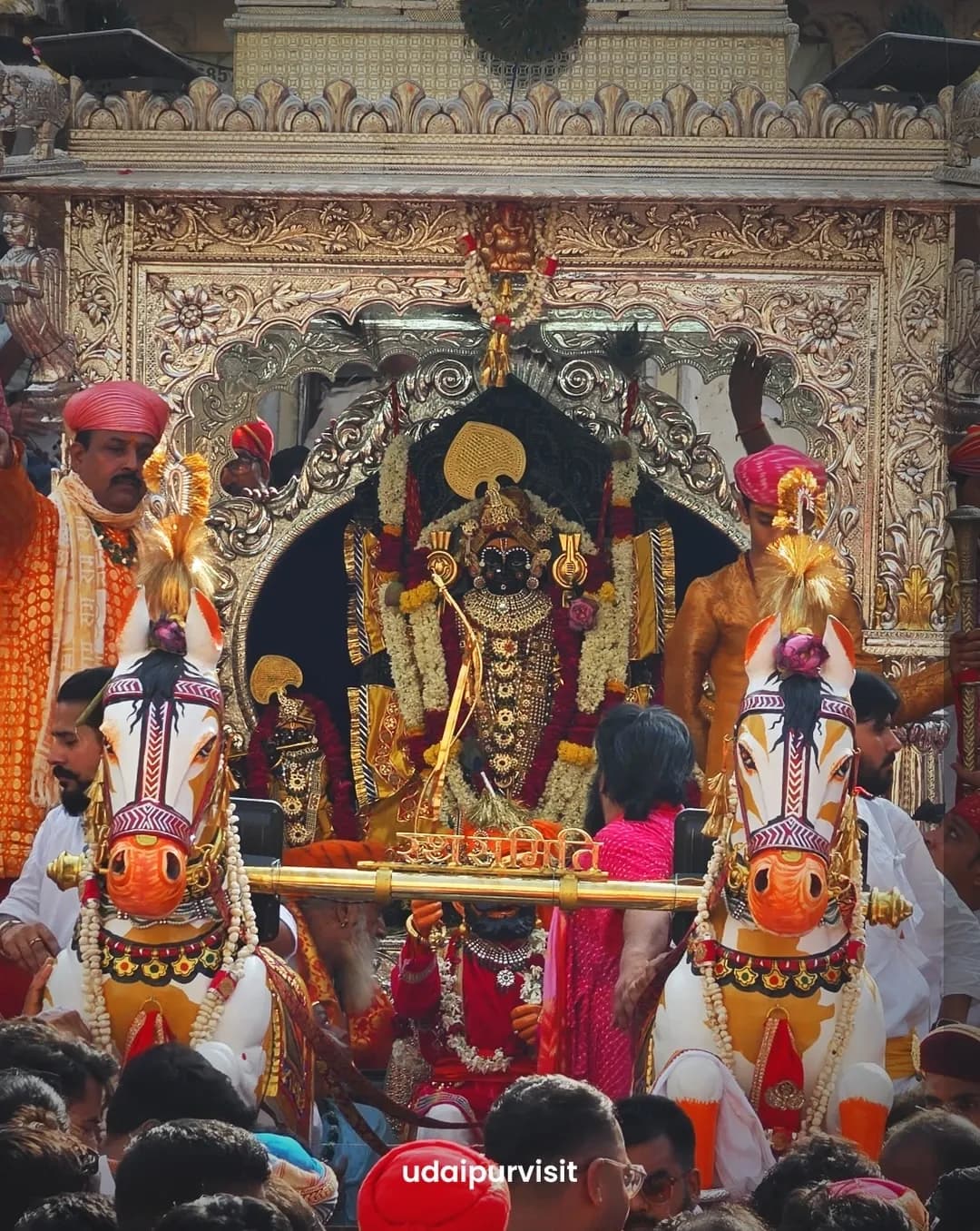
The word combines pichh (back) and wai (hanging). A Pichwai is a large painted cloth hung behind the image of Shrinathji, the form of Krishna worshipped at Nathdwara. Shrinathji is shown as a child lifting Mount Govardhan, so you'll see him with one arm raised and a dark complexion, standing still at the centre while the world around him celebrates.
The image of Shrinathji was brought to Mewar from the Braj region in the 17th century, and the town of Nathdwara grew around the shrine. Painters followed, and families of artists have worked here for generations, producing hangings for the temple and, increasingly, for devotees and collectors.
How to read a Pichwai
Every detail is symbolic, and once you know a few, the paintings start talking to you.
- Lotuses. Ponds full of pink and white lotuses stand for purity and devotion. Some Pichwais are almost nothing but lotuses, buds and bees.
- Cows. Krishna was a cowherd, so cows appear everywhere, often decorated with handprints and bells.
- Gopis. The milkmaids who loved Krishna stand in rows, carrying offerings or dancing in the Raas Leela.
- The night sky. A deep blue background with a full moon often points to Sharad Purnima, the autumn full-moon night.
- Mountains of food. Heaps of sweets and rice refer to Annakut, the festival of offerings after Diwali.
Look at how Shrinathji is dressed, too. His clothes, jewellery and even the shape of his turban change with the occasion, and painters follow these rules carefully, so devotees can often tell which festival a Pichwai belongs to at a glance. It's a little like reading a calendar made of colour.
Because the temple changes its hangings to match festivals and seasons, Pichwais come in themes: monsoon scenes with clouds and peacocks, spring scenes with flowers, festival scenes heavy with gold.
Visiting Nathdwara
Nathdwara makes an easy half-day trip from Udaipur, and it pairs nicely with Eklingji temple, which is on the way. The town revolves around darshan, the moments when the shrine opens for devotees to see Shrinathji. There are several darshan slots through the day with closed periods in between, and the timings change with the temple calendar, so check them before you set out.
Expect crowds, especially on festivals and weekends. Phones, cameras and bags are generally not allowed inside, so carry as little as possible. Dress modestly and be ready for an enthusiastic, shoulder-to-shoulder rush when the doors open.
After darshan, wander the lanes around the temple. You'll find painters' workshops, framing shops and stalls selling small Pichwais and prints. Molela, the terracotta village, is also close by; our souvenir guide covers what to look for there.
Local tip: Go early in the morning. The first darshan is the most atmospheric, the town is cooler, and you'll be back in Udaipur in time for a lazy lunch by the lake.
Buying a Pichwai
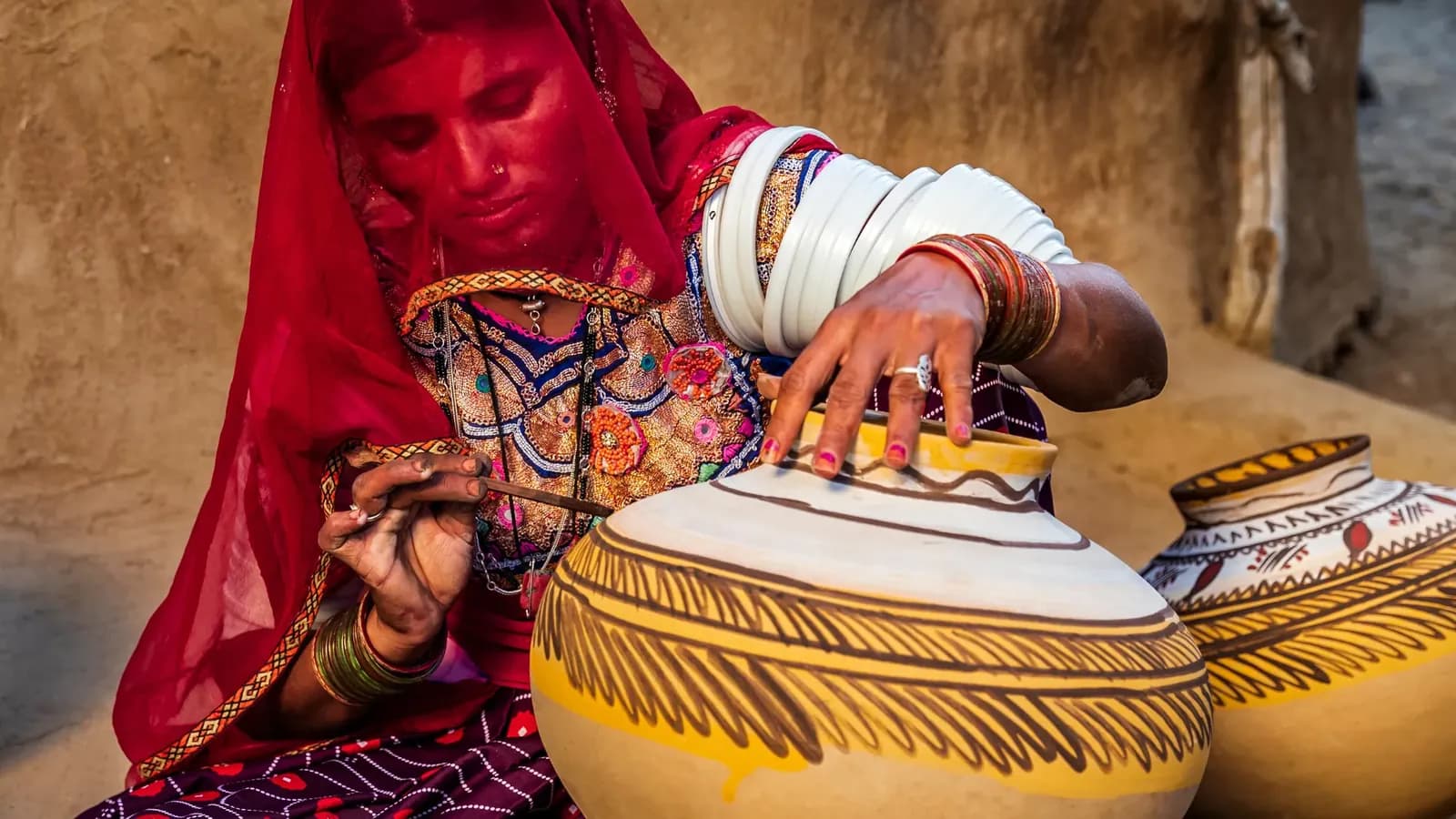
Traditional Pichwais are painted on cloth with natural pigments, and the finest use real gold and silver. Many are large, but smaller pieces and paintings on paper are easier to carry and frame.
Hand-painted vs printed
Prints on canvas are everywhere. Look closely at the lotus petals and faces: hand-painted work has visible brushstrokes, fine shading and tiny imperfections. Real gold leaf catches light differently as you move. The same phone-zoom trick from our miniature painting guide works here.
Questions worth asking
- Who painted it, and how long did it take?
- Are the colours natural pigments or synthetic paints?
- Is the gold real gold leaf or gold paint?
- Can it be rolled for travel without cracking?
An honest artist will answer clearly, and the answers help you understand why prices vary so much. If a full-size temple hanging is too big for your walls or your luggage, look for a single panel: a cluster of lotuses, a pair of cows or one gopi. Many painters sell these detailed fragments, and they frame beautifully.
Good to know: Cloth Pichwais should travel rolled with the painted side facing out, wrapped in soft cloth, never folded.
Want Nathdwara, Eklingji and Haldighati in one comfortable day? Our travel assistance team can connect you with a trusted local driver.
Quick answers
What is a Pichwai painting?
A devotional painting, traditionally on cloth, hung behind the image of Shrinathji at Nathdwara and showing scenes from Krishna's life, festivals and seasons.
How far is Nathdwara from Udaipur?
About 48 km, roughly an hour or so by road depending on traffic.
Where can I buy Pichwai paintings near Udaipur?
In the painters' lanes around the Nathdwara temple, and in art shops around Jagdish Chowk in Udaipur's old city.