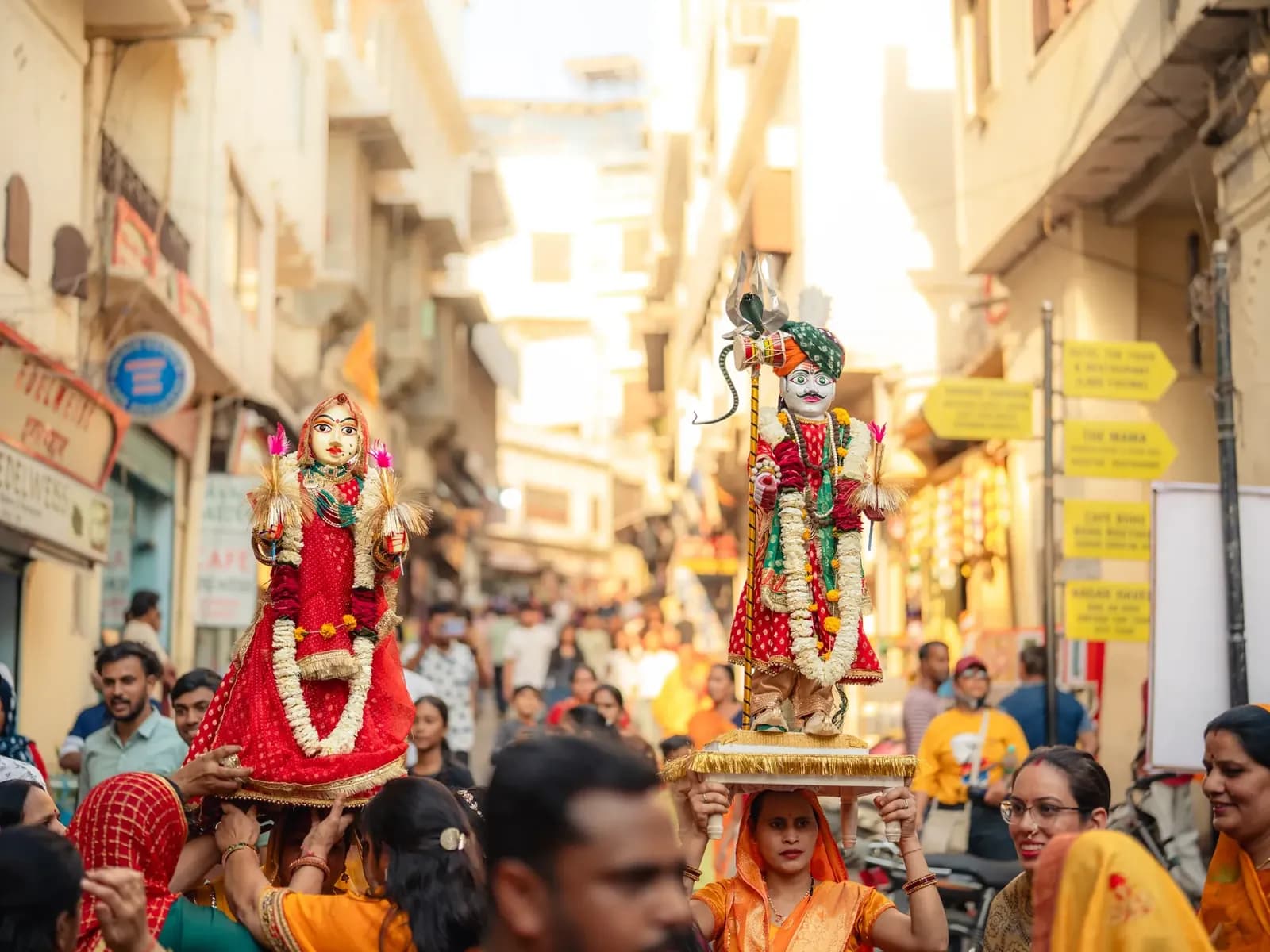
Every spring the old city starts to sound different. Dhols echo off haveli walls, bangles clink in every lane, and small, beautifully dressed idols of Gauri ride on the heads of women walking down towards the water. That's Gangaur, and in Udaipur it arrives with a bonus act: the Mewar Festival, when the ghats glow, boats drift across Lake Pichola and fireworks spill over the lake. If you can bend your travel dates around it, do.
What Gangaur is really about
Gangaur honours Gauri, a form of the goddess Parvati, and her consort Shiva, often called Isar in Rajasthan. The name itself joins "Gan" (Shiva) and "Gaur" (Gauri). Married women pray for the long life and wellbeing of their husbands, while young unmarried women ask Gauri for a good match. It's one of the most loved festivals for women across Rajasthan, and you'll feel that energy everywhere.
The celebrations begin the day after Holi and build over roughly two and a half weeks. Women apply fresh mehendi, sing traditional Gangaur songs, and dress clay or wooden idols of Isar and Gauri in miniature jewellery and fabric. By the final days, the whole city seems to be wearing its best clothes.
When it happens (and why we won't give you a date)
Gangaur follows the Hindu calendar and falls in the month of Chaitra, which usually lands in March or April. The main processions and the Mewar Festival programme run over the last two or three days of Gangaur.
Good to know: the dates move every year with the lunar calendar. Check the current year's Gangaur dates with Rajasthan Tourism or local news before you book, and pad your stay by a day in case the main evening shifts.
The procession to Gangaur Ghat
In the late afternoon, groups of women carry their Gauri idols out of homes and neighbourhood temples and walk through the old city lanes around Jagdish Temple. The destination is Gangaur Ghat, the stepped waterfront right beside Bagore ki Haveli, which takes its very name from this festival. Brass bands, drummers and singing groups join in, and the lanes become a slow river of red, pink and gold.
At the ghat the idols are brought to the water's edge for rituals and prayers. It's moving to watch, and it's very much a living religious event rather than a show staged for visitors, so keep a respectful distance at the most private moments.
Boats, music and fireworks on Lake Pichola
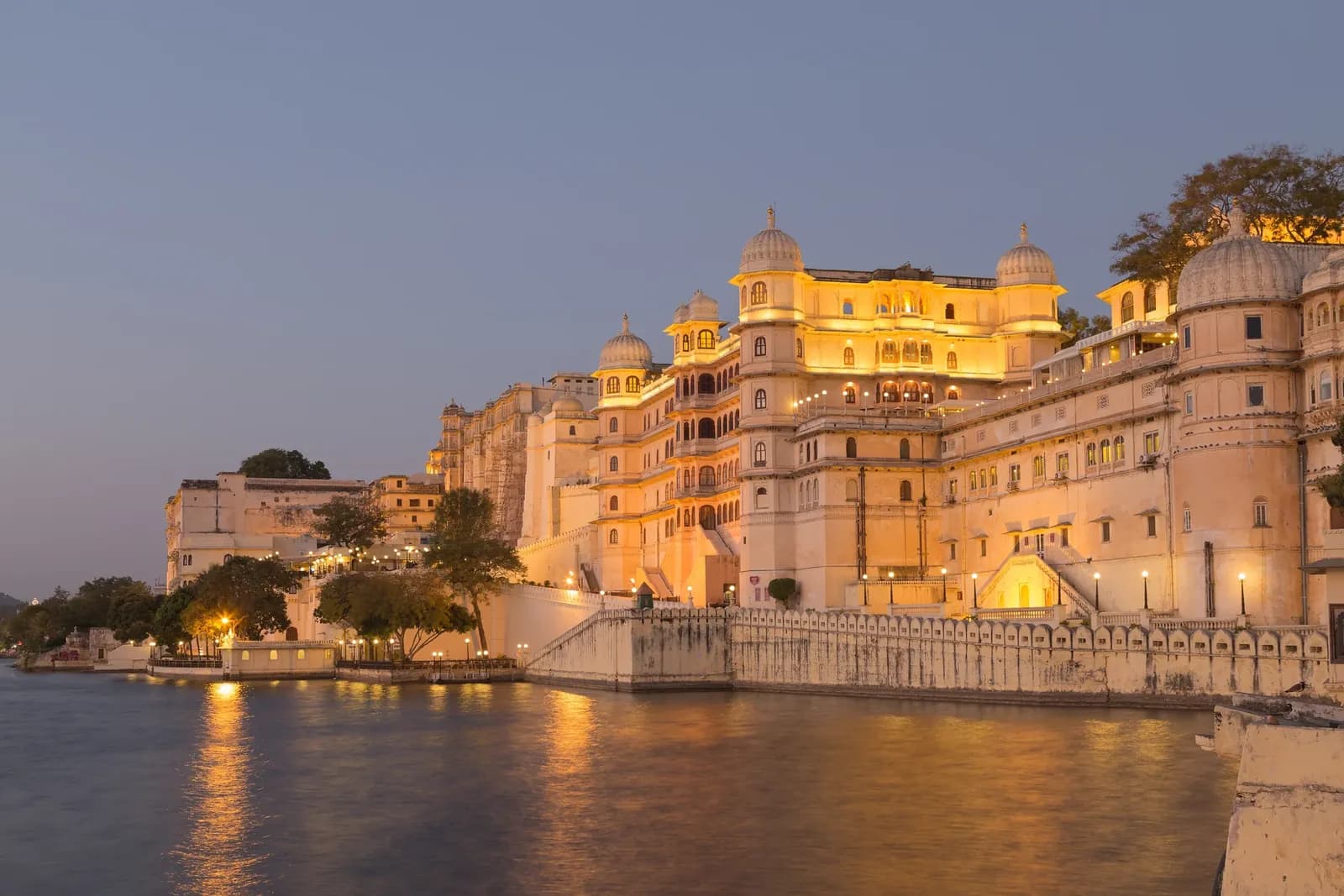
As the light fades, the Mewar Festival side of things takes over. Decorated boats appear on Lake Pichola, there are usually cultural programmes with Rajasthani folk music and dance, and the evening tends to end with fireworks lighting up the water in front of the City Palace. The exact line-up changes from year to year, so treat any schedule you see online as a guide and confirm locally on the day.
Where to stand
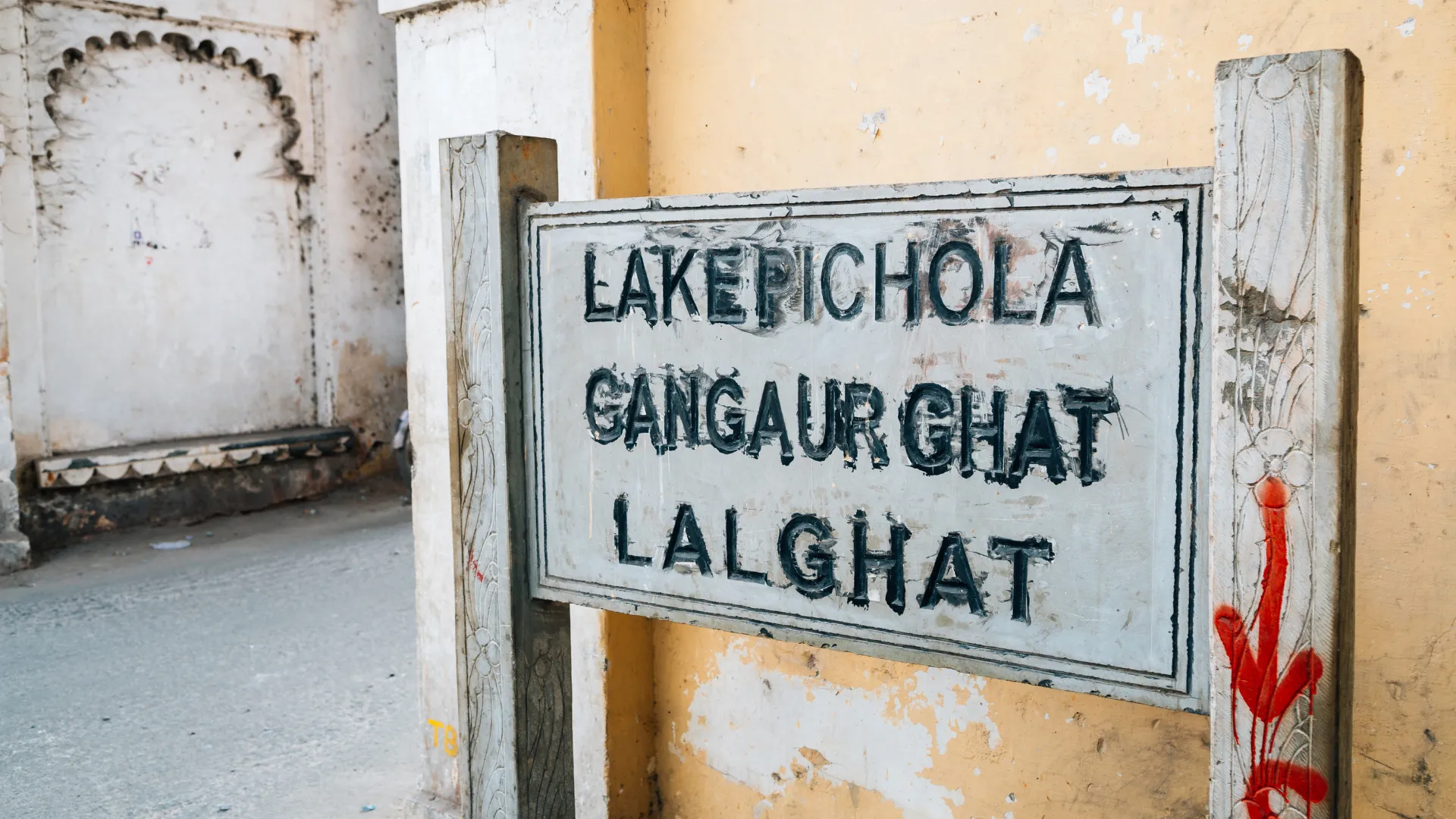
Gangaur Ghat itself
The closest you can get to the rituals, and the most crowded. Arrive in the early afternoon, find a step, and accept that you'll be sharing it with half of Udaipur.
The lanes around Jagdish Temple
Best for seeing the procession up close as it passes. Stand slightly back from the narrowest corners so the women carrying idols have room to move.
Rooftops around Lal Ghat and Gangaur Ghat
Many rooftop restaurants overlook the ghats. On festival evenings the good tables fill fast, so ask your stay to reserve one early in the day.
Ambrai Ghat, across the water
Our favourite for the fireworks. You get the classic view of the City Palace with boats and bursts of colour reflected in the lake, and the crowd is calmer than on the old city side.
Photography tips
- Ask first. Many women are happy to be photographed, some aren't. A smile and a gesture towards your camera goes a long way.
- Skip the flash during prayers. It's distracting and it flattens all that lovely lamp light anyway.
- Bring a fast lens or use night mode. The procession reaches the ghat around golden hour and the fireworks are fully dark.
- Forget the tripod in the crowd. Brace your camera on a railing or wall instead.
- Leave the drone at home. Flying over crowds and heritage areas needs permissions you almost certainly won't have.
- Shoot the details: hennaed hands, idol jewellery, a grandmother adjusting a child's odhni. These are often better frames than the wide shot.
Practical tips for the day
Book your stay early, especially anything near the lake, because Gangaur is one of Udaipur's busiest spring weekends. Autos can't get into the inner lanes once the processions start, so plan to walk the last stretch. Days are already warm by March, so carry water and wear comfortable shoes you don't mind getting dusty. Modest clothing is appreciated near the temples and ghats.
Local tip: eat early. Grab a kachori and chai in the afternoon before you find your spot, because getting back out of the crowd for dinner is a mission in itself.
Since Gangaur starts right after Holi, you can easily combine the two; our guide to Holi in Udaipur covers the colourful opening act. For other dates worth planning around, see our Udaipur festival calendar, and if you'd like help sorting stays and transfers, plan your trip with us.
Quick answers
When is Gangaur celebrated in Udaipur?
In the Hindu month of Chaitra, usually March or April. It starts the day after Holi and the main processions fall on the final days. Check the current year's dates before you travel.
Can tourists join the Gangaur procession?
You can watch freely from the lanes and ghats. The rituals are led by local women, so observe respectfully and ask before taking close-up photos.
Where is the best place to watch the Mewar Festival fireworks?
Ambrai Ghat gives the widest view of the City Palace and lake, while Gangaur Ghat and nearby rooftops put you right in the middle of the action.